I help you automate the repetitive work that eats ten or more hours a week. Your senior people get those hours back for the work only they can do. Your firm's methods and your clients' data stay confidential.
Before your name goes on a report, three things have to hold.
The report stays right.
A summary that invents a number, or a citation that points nowhere, becomes your error the moment you sign.
Your methods stay yours.
They took years to build, and they're why clients pay your rate. They live in your templates, checklists and past reports, and the wrong tool can keep a copy of all three.
Your clients' data stays put.
Client files arrive under a confidentiality clause, so you need to be able to say in writing where they go and what's kept.
Each of those has a good answer, and it's decided by how the tools are set up: where the knowledge sits, what leaves your environment, what gets retained, and what never touches a public model.
You get those answers settled, in writing, before anything gets built. Then the repetitive work that eats your senior hours gets automated inside your firm: the reading, the comparing, the checking, and the admin around every deliverable. Documents are the example on this page. The same approach fits any process in a firm of 10 to 30 people where a named professional signs the result.
One example: three tools for the documents, built inside your environment.
Your documents are usually the place to start, because that's where the senior hours go. Your intake, scheduling, reporting and billing follow the same pattern. Here's the document version.
Read
Point it at a data room, a document set, or a pile of third-party reports and get back a grounded summary, with every point cited to its source page.
Compare
Check a new project against everything you've seen before. Figures go into a fixed format, and every number traces to where it came from.
Check
Run a draft against the standard before it goes out: missing citations, numbers that don't match between the table and the summary, claims with nothing behind them. You get a findings list, not a rewrite.
The model reads, drafts and flags. It never does the arithmetic.
Run a check on a sample page.
The sample has four claims and the table they rely on. Press the button and the page adds up the table in code and stamps each claim. Change a figure in the table and run it again.
Demo · invented figures, no client material
Project summary
Total capital cost is estimated at $48.2 million (Table 1).1Site works account for $6.4 million of the total.2Contingency is set at 10% of direct costs (Table 1).3The schedule is achievable within 30 months.4
Table 1. Capital cost estimate
Item
$ million
Site works
Structure
Mechanical and electrical
Fit-out
Contingency
Direct costs are every line except contingency.
The arithmetic runs in this page's code. No model is involved.
Findings
Press "Run the check" to stamp each claim.
Doesn't match
Claim 1The sentence says $48.2 million; the table adds up to $46.9 million.
Medium
Claim 2Matches: the table shows $6.4 million. The sentence doesn't cite a source.
High
Claim 3Matches: $4.3 million is 10.1% of $42.6 million. Cites Table 1.
Low
Claim 4No figure in the table covers this. A person has to confirm it.
How each stamp is decided
High
The number matches the table, and the sentence says where it came from.
Medium
The number matches the table, but the sentence doesn't say where it came from.
Low
There's nothing on the page to check the claim against.
Doesn't match
The number in the sentence differs from what the table adds up to.
Five commitments, signed.
They apply from the first conversation, whether or not we end up working together.
The NDA comes first.It's signed before the first substantive conversation, so you never have to decide what's safe to tell me.
Your material never trains a model.Every tool is configured with training off, in writing.
Work stays in your environment wherever it's sensitive.It runs on systems you control, with private and on-device options for the most delicate parts.
A written record of what touched what.It shows which tool saw which material, under which setting, so you can answer a client with documents.
I'll tell you where AI doesn't belong in your work.I'll say so even when it shrinks the engagement.
Signed · every engagementDavid Martin, Martin Digital Consulting
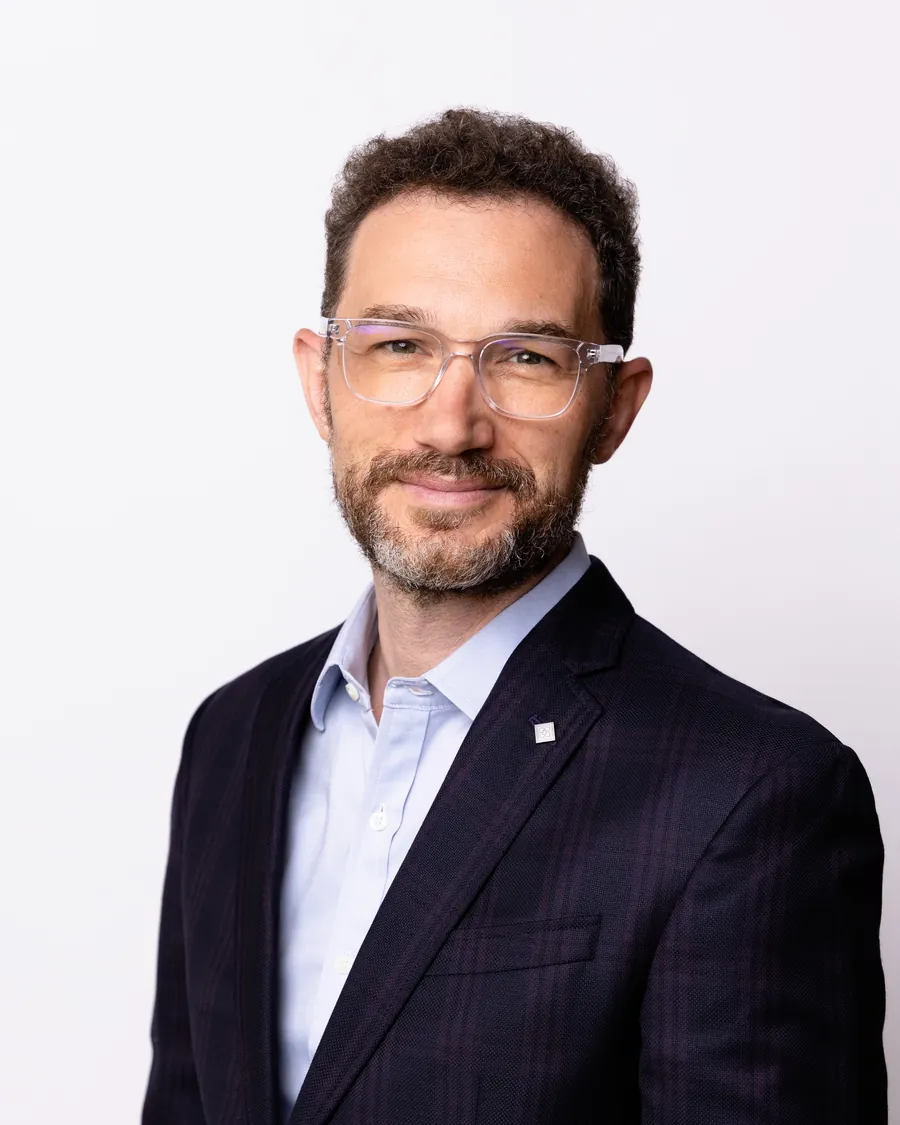
David Martin, Berkeley Haas MBA
You work with the person who signed those commitments.
I'm David Martin. I spent a decade at Orange, where I helped scale its fiber internet service, and I've advised startups on go-to-market since 2013. I've lived and worked in Switzerland, Taiwan, China and France.
Right now I'm working with a few consulting firms in the mining industry, where the technical reports carry a Qualified Person's signature. Anything I build for a firm like that has to hold up when someone puts their name on the result.
You get a written map of where AI helps, where it must never touch, what it would take to build, and roughly how many hours a week it gives back. It comes out of a working session inside one of your workflows, with the people who do the work.
Who it's for
Firms that want a clear answer before committing to anything.
A weekly engagement
What happens
You get a set number of hours each week. The automation gets built inside your environment, your team learns to run it, and you keep the written record of what touched what. That can be Read, Compare and Check for the documents, or a process further from the deliverable.
Who it's for
Firms that want senior time back, week after week, and someone on the inside to keep the automation moving.
Every engagement is quoted in writing before work begins.
The data question comes first.
Asked first, alwaysWhere does our client data go?
Nowhere, until you decide it should. An AI audit looks only at your workflows and processes, so it happens without anyone reading a single client document. When a build does need real material, it runs in your environment, under the NDA, with a written data-handling plan you approve first.
Does anything train on our data?
No. Nothing you share trains any model, mine or a vendor's. Every tool is configured with training off, and the setting is documented so you can show it to a client.
What does the model do, and what doesn't it?
It reads, drafts and flags. It never does the arithmetic: figures are extracted to a fixed format and compared in code, so every number traces back to the page it came from. You make the calls, and you sign.
Which tools do you use?
You get vendor-neutral advice. Tools are chosen on your risk profile, including private and on-device options, and any vendor whose terms allow training on your data is off the list.
What do we tell our clients?
The truth, in writing. You get an AI policy and a record of what touched what, so the answer to "do you use AI on our work?" is a document you can hand over.
What does it cost?
Every engagement is quoted in writing before work begins. The quote follows a first conversation, once we both know what the work is.
AI for people who are accountable for what they say.